 Image 1 of 1
SCIATICA CARE PACK
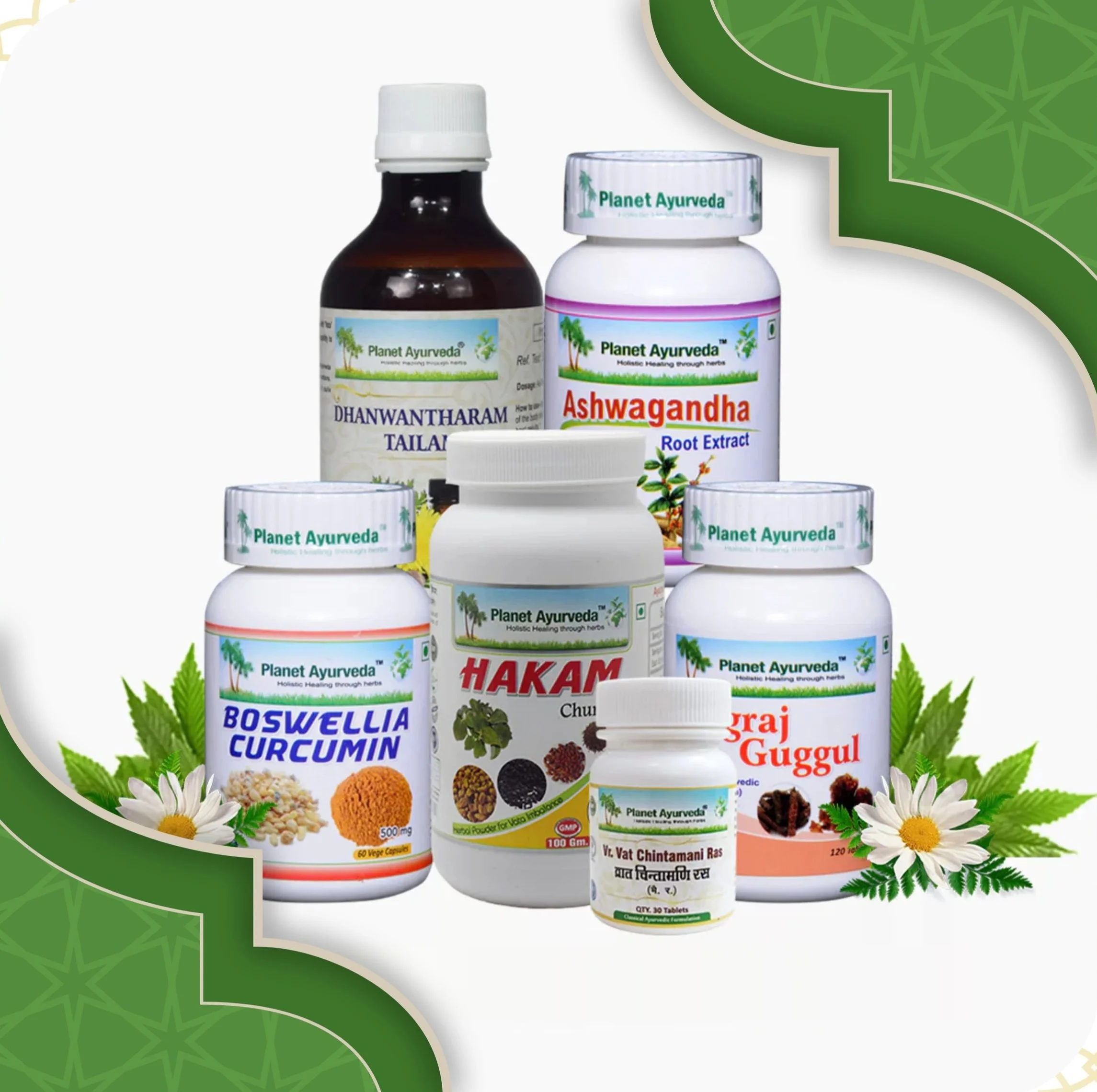
Sciatica Care Pack Incudes:
DOSAGE
Hakam Churna - 1 tsp. twice daily with warm water, after meals. 2 Bottles
2. Boswellia Curcumin - 2 capsules twice daily with warm water, after meals. 2Bottles
3. Yograj Guggul - 2 tablets twice daily with warm water, after meals. 1 Bottles
4. Ashwagandha Capsules - 1 capsule twice daily with warm water, after meals. 1 Bttl
5. Vrihat Vatchintamani Ras - 1 tablet twice daily with warm water, after meals. 2 Bttls
6. Dhanwantharam Tailam - Massage externally after warming it up through a water bath method. 1 Bottle.
Planet Ayurveda's Sciatica Care Pack is a collection of herbal formulations designed to naturally manage sciatica. Its primary benefits include reducing sciatic nerve inflammation, alleviating shooting lower-back pain, pacifying the body’s Vata dosha (which governs nerve pain in Ayurveda), and improving overall spinal and muscular strength.
The care pack uses a combination of specific herbal remedies and oils. The traditional benefits associated with these components include:
Boswellia Curcumin: A combination of Shallaki (Boswellia serrata) and Curcumin that acts as a natural anti-inflammatory to soothe irritated or compressed nerve tissues.
Hakam Churna: A powder blend of herbs (including Ajwain, Methi, and Kalonji) used to help improve digestion and relieve abdominal or joint gas, which can contribute to Vata aggravation.
Yograj Guggul: A traditional Ayurvedic tablet aimed at supporting overall joint health, easing stiffness, and promoting mobility in the lower limbs.
Ashwagandha Capsules: An adaptogenic herb that helps nourish the nervous system, reduce muscle tension, and combat physical fatigue.
Vrihat Vatchintamani Ras: A classical Ayurvedic preparation used to balance the nervous system, thereby supporting nerve health and vitality.
Dhanwantharam Tailam: A herbal oil used for gentle, localized massage to warm the area, relieve muscle spasms, and improve blood circulation to the lower back.
Formulation Advantages
100% Natural: Free from artificial colors, chemicals, preservatives, and fillers.
Detoxification: Aids in flushing out improper digestion toxins (ama) that can weaken the immune system.
To effectively manage sciatica, your diet should focus on warm, cooked, anti-inflammatory foods that pacify the Vata dosha (the biological energy associated with the nervous system and pain). You must avoid cold, raw, processed, and gas-producing foods, which aggravate nerve sensitivity and increase inflammation.
The comprehensive dietary guidelines to support your recovery are organized into specific food categories below:
Foods to Eat (Include Generously)
Grains: Basmati rice, whole wheat, oats, and quinoa prepared as warm, soft meals (like porridge or khichdi).
Vegetables: Fully cooked root vegetables including carrots, sweet potatoes, beets, bottle gourd, and pumpkin.
Healthy Fats: Cow’s ghee, sesame oil, and olive oil to lubricate tensed tissues and counter Vata dryness.
Spices: Turmeric, ginger, cumin, fenugreek, fennel, ajwain, and a pinch of hing (asafoetida) to aid digestion and lower inflammation.
Proteins & Legumes: Well-cooked green mung dal (moong dal) cooked with warming spices. Lean proteins like chicken or fish can be consumed if you eat non-vegetarian food.
Fruits: Sweet, ripe, and heavy fruits such as bananas, papayas, mangoes, avocados, and dark berries.
Dairy: Warm milk boiled with a pinch of turmeric and ashwagandha or black pepper before bedtime.
Foods to Avoid (Strictly Limit)
Raw & Cold Foods: Raw salads, iced drinks, ice cream, and cold refrigerated foods that trigger muscle spasms and Vata imbalance.
Gas-Forming Veggies: Cabbage, broccoli, cauliflower, Brussels sprouts, and raw onions, as intestinal gas worsens lower-back pressure.
Heavy Legumes: Chickpeas, kidney beans, pinto beans, and black-eyed peas, which are difficult to digest and increase Vata.
Refined Carbs & Sugars: White bread, pastries, sugary sodas, and processed junk food that directly release pro-inflammatory proteins.
Inflammatory Fats: Deep-fried foods, commercial vegetable oils, trans fats, and heavily processed meats like bacon or sausage.
Dry Snacks: Crackers, commercial chips, popcorn, and dry cereals that dry out body tissues.
Stimulants: Excess caffeine (coffee, energy drinks) and alcohol, which dehydrate the body and irritate the nervous system.
Disclaimer: Ayurvedic supplements are intended for holistic health support. Always consult with a qualified healthcare provider or licensed Ayurvedic practitioner before beginning any new treatment, especially if you have an underlying medical condition.
Sciatica Care Pack Incudes:
DOSAGE
Hakam Churna - 1 tsp. twice daily with warm water, after meals. 2 Bottles
2. Boswellia Curcumin - 2 capsules twice daily with warm water, after meals. 2Bottles
3. Yograj Guggul - 2 tablets twice daily with warm water, after meals. 1 Bottles
4. Ashwagandha Capsules - 1 capsule twice daily with warm water, after meals. 1 Bttl
5. Vrihat Vatchintamani Ras - 1 tablet twice daily with warm water, after meals. 2 Bttls
6. Dhanwantharam Tailam - Massage externally after warming it up through a water bath method. 1 Bottle.
Planet Ayurveda's Sciatica Care Pack is a collection of herbal formulations designed to naturally manage sciatica. Its primary benefits include reducing sciatic nerve inflammation, alleviating shooting lower-back pain, pacifying the body’s Vata dosha (which governs nerve pain in Ayurveda), and improving overall spinal and muscular strength.
The care pack uses a combination of specific herbal remedies and oils. The traditional benefits associated with these components include:
Boswellia Curcumin: A combination of Shallaki (Boswellia serrata) and Curcumin that acts as a natural anti-inflammatory to soothe irritated or compressed nerve tissues.
Hakam Churna: A powder blend of herbs (including Ajwain, Methi, and Kalonji) used to help improve digestion and relieve abdominal or joint gas, which can contribute to Vata aggravation.
Yograj Guggul: A traditional Ayurvedic tablet aimed at supporting overall joint health, easing stiffness, and promoting mobility in the lower limbs.
Ashwagandha Capsules: An adaptogenic herb that helps nourish the nervous system, reduce muscle tension, and combat physical fatigue.
Vrihat Vatchintamani Ras: A classical Ayurvedic preparation used to balance the nervous system, thereby supporting nerve health and vitality.
Dhanwantharam Tailam: A herbal oil used for gentle, localized massage to warm the area, relieve muscle spasms, and improve blood circulation to the lower back.
Formulation Advantages
100% Natural: Free from artificial colors, chemicals, preservatives, and fillers.
Detoxification: Aids in flushing out improper digestion toxins (ama) that can weaken the immune system.
To effectively manage sciatica, your diet should focus on warm, cooked, anti-inflammatory foods that pacify the Vata dosha (the biological energy associated with the nervous system and pain). You must avoid cold, raw, processed, and gas-producing foods, which aggravate nerve sensitivity and increase inflammation.
The comprehensive dietary guidelines to support your recovery are organized into specific food categories below:
Foods to Eat (Include Generously)
Grains: Basmati rice, whole wheat, oats, and quinoa prepared as warm, soft meals (like porridge or khichdi).
Vegetables: Fully cooked root vegetables including carrots, sweet potatoes, beets, bottle gourd, and pumpkin.
Healthy Fats: Cow’s ghee, sesame oil, and olive oil to lubricate tensed tissues and counter Vata dryness.
Spices: Turmeric, ginger, cumin, fenugreek, fennel, ajwain, and a pinch of hing (asafoetida) to aid digestion and lower inflammation.
Proteins & Legumes: Well-cooked green mung dal (moong dal) cooked with warming spices. Lean proteins like chicken or fish can be consumed if you eat non-vegetarian food.
Fruits: Sweet, ripe, and heavy fruits such as bananas, papayas, mangoes, avocados, and dark berries.
Dairy: Warm milk boiled with a pinch of turmeric and ashwagandha or black pepper before bedtime.
Foods to Avoid (Strictly Limit)
Raw & Cold Foods: Raw salads, iced drinks, ice cream, and cold refrigerated foods that trigger muscle spasms and Vata imbalance.
Gas-Forming Veggies: Cabbage, broccoli, cauliflower, Brussels sprouts, and raw onions, as intestinal gas worsens lower-back pressure.
Heavy Legumes: Chickpeas, kidney beans, pinto beans, and black-eyed peas, which are difficult to digest and increase Vata.
Refined Carbs & Sugars: White bread, pastries, sugary sodas, and processed junk food that directly release pro-inflammatory proteins.
Inflammatory Fats: Deep-fried foods, commercial vegetable oils, trans fats, and heavily processed meats like bacon or sausage.
Dry Snacks: Crackers, commercial chips, popcorn, and dry cereals that dry out body tissues.
Stimulants: Excess caffeine (coffee, energy drinks) and alcohol, which dehydrate the body and irritate the nervous system.
Disclaimer: Ayurvedic supplements are intended for holistic health support. Always consult with a qualified healthcare provider or licensed Ayurvedic practitioner before beginning any new treatment, especially if you have an underlying medical condition.